
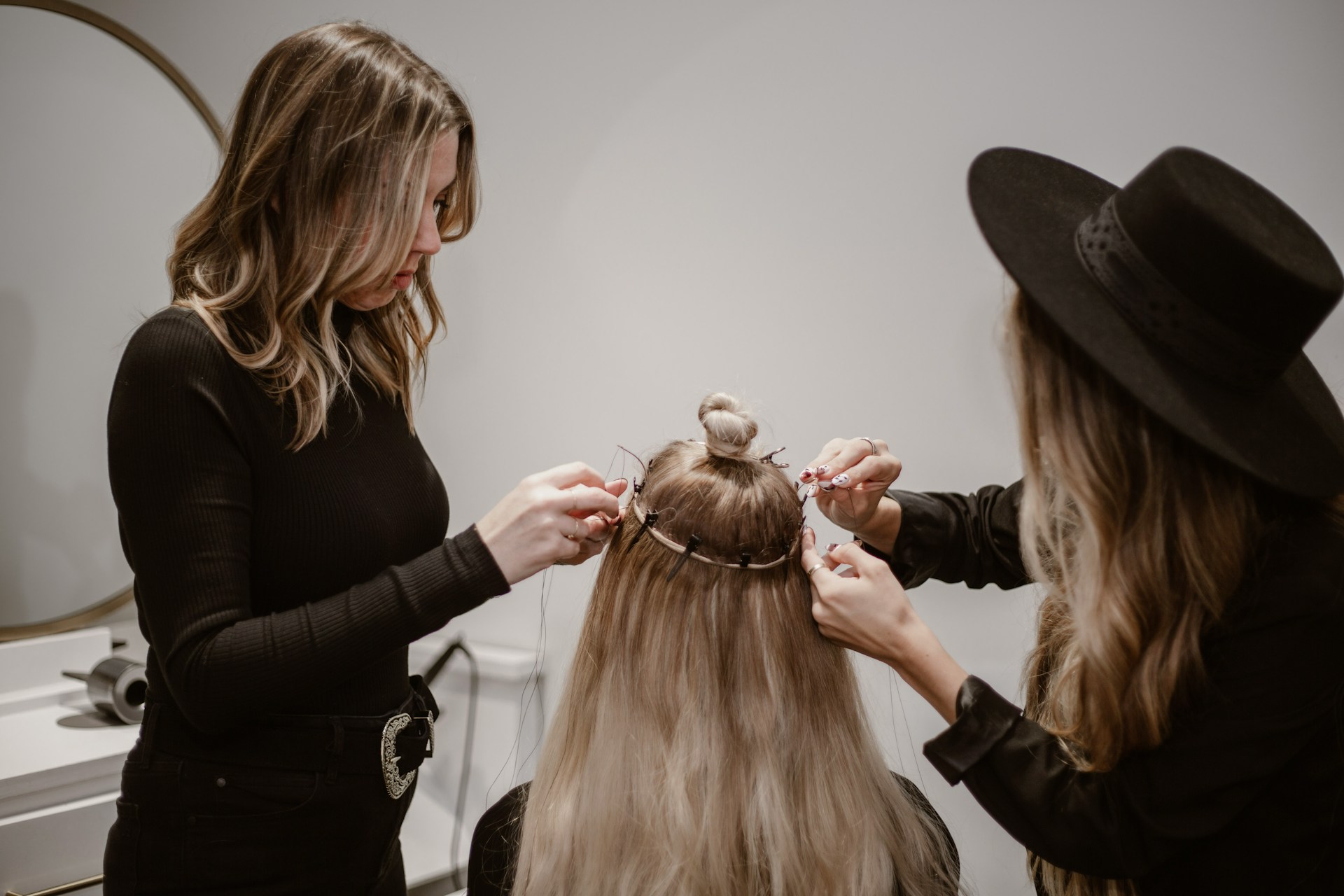
Long-Lasting Hair Extensions: Why Maintenance Haircuts Matter
Healthy, blended ends are what make hair extensions look expensive and natural, not just the length. When your ends get rough, stringy, or see-through, even the nicest tape-ins, hand-tied wefts, or K-tips can start to look obvious. Regular maintenance haircuts keep everything soft, flowing, and seamless so your extensions stay in the “is that all her hair?” zone.
If you live in a sunny or humid climate, strong sun, salt air, and heavy humidity can dry out both your natural hair and your extensions. A smart trim schedule helps protect your hair and keep your style looking polished.
Why Extension Maintenance Haircuts Matter
A maintenance haircut is not a big chop or a full restyle. It is a light, careful clean-up that keeps your existing shape, protects your natural hair, and supports the way your extensions were installed.
During an extension maintenance cut, a stylist will usually focus on:
- Dusting dry or split ends
- Softly reshaping the layers
- Blending your natural hair into your extensions
- Cleaning up the perimeter line so it looks strong, not see-through
By trimming on a regular basis, you stop split ends from traveling up your natural hair. This protects the hair growing out of your scalp and also helps your extension hair move and shine better. When the ends are clean, your style holds a curl better, waves look softer, and blowouts last longer.
Many people worry that “a trim” will secretly turn into a big haircut. A skilled stylist will remove just enough to keep hair healthy, without taking off more length than you are comfortable with. Skipping trims tends to catch up over time; if you wait too long, more hair may need to be removed later to fix frayed, thinned out ends.
How Often to Trim Tape-Ins, Hand-Tied Wefts, and K-Tips
Every extension method has its own ideal timing for maintenance haircuts. Keeping a loose schedule in mind helps you stay ahead of damage.
General guidelines:
- Tape-ins: a light dusting at every move-up, usually about every 6 to 8 weeks
- Hand-tied wefts: reshaping and perimeter clean-up every 8 to 10 weeks
- K-tips (keratin bonds): detailed dusting every 10 to 12 weeks
With tape-ins, trims often happen when the extensions are moved up. This is the perfect time to remove dry ends and keep the edges soft so that your natural hair and extensions blend. Hand-tied wefts tend to hold their shape nicely, but they can start to look bulky or heavy if the perimeter is not cleaned up. K-tips sit in small, individual sections, so a gentle dusting helps keep the natural hair around each bond smooth and less likely to tangle.
If you spend a lot of time in the pool, ocean, or sun, your ends can dry out and roughen faster. Chlorine, salt, and UV exposure all play a role. In that case, you may need trims a little more often than someone who spends most of their time indoors.
You are probably overdue for a trim if:
- You feel extra tangles at the nape of your neck
- Your ends feel rough, sticky, or grabby when you run your fingers through
- Your extensions do not blend with your natural hair like they used to
- Your face-framing pieces look uneven or are not flattering your face anymore
How Much to Cut Without Losing Your Length
With extensions, a little goes a long way. The goal is to keep the drama of your length while making sure your hair still looks healthy and full at the bottom.
As a general guide:
- Light dusting: about 1/4 to 1/2 inch off the very ends
- Stronger clean-up: up to 1 inch if ends are visibly frayed or thin
When visits are consistent, trims usually stay in the “barely noticeable” range. A stylist will typically assess:
- Density at the ends: Do they look full or wispy?
- Where your natural hair ends: How does it meet your extension hair?
- The shape overall: Does it look purposeful or just long and stringy?
Your daily styling habits matter too. If you love beach waves, a strong perimeter can help waves look thick at the bottom, while soft, face-framing layers keep movement around your cheekbones and jawline. Internal layers can add bounce and swing without making the ends look thin. The aim is to protect your extension investment, not cut into it.
What to Discuss with Your Stylist Before a Trim
Clear communication makes extension maintenance haircuts stress-free. Before the scissors come out, ask questions so you and your stylist are on the same page.
Helpful questions include:
- “How much do you recommend taking off today, and why?”
- “Can you show me where my natural hair ends and where the extensions start?”
- “What kind of layers work best with my specific extension method?”
A good stylist can show you in the mirror exactly where your own hair sits, then point out how much they recommend taking off to keep it healthy. Bringing inspiration photos can help, especially images that show both length and shape. The cut should be adapted to your extension method instead of copying a look designed only for natural hair.
Salons experienced with extension-safe haircuts will section carefully around tape tabs, wefts, and K-tip bonds so they do not expose attachment points or cut into the extension hair you paid for.
At-Home Care Between Salon Visits
What you do between trims matters just as much as the trim itself. Gentle care keeps your ends smoother and your haircut looking polished longer.
Daily and weekly habits that help:
- Use sulfate-free, extension-safe shampoo and conditioner
- Hold your hair at the mid-lengths and brush from ends up with a soft brush
- Sleep with hair in a loose braid or low ponytail
- Keep hot tools on a lower heat setting and use a heat protectant
If you swim or spend a lot of time outside:
- Rinse your hair with fresh water after swimming in a pool or ocean
- Use UV protectant spray on your hair when you know you will be outside
- Avoid very tight ponytails or high messy buns that pull on attachment points
- Keep heavy salt sprays to a minimum, since they can cause tangles at the ends
When you style, think about preserving your shape instead of starting from scratch each day. You can refresh waves by curling a few top sections and around the face instead of re-curling every strand. Go easy on gritty texturizing sprays, which can rough up the cuticle, especially near the nape where tangles show up first.
Key Takeaways for Long-Lasting Extensions
- Schedule regular, minimal trims based on your extension type.
- Watch for signs of wear at the ends, like tangling and rough texture.
- Communicate clearly with your stylist about length and layering.
- Follow gentle at-home care to protect both your natural hair and your extensions.
By pairing the right trim schedule with thoughtful maintenance, you can keep your extensions looking full, blended, and healthy for as long as possible.
Refresh Your Look With a Customized Sarasota Haircut
If you are ready for a cut that actually suits your face shape, lifestyle, and hair texture, we would love to work with you at SRQ Couture Salon and Spa. Our stylists take the time to listen, offer ideas, and create a look that feels easy to maintain long after you leave the chair. Explore our tailored options for haircuts in Sarasota and schedule your appointment so we can help you feel confident about your hair again.